Back to top

Back to the list

Building Homes and Hope: How an Unexpected CEO is Solving the Single-Mother Housing Insecurity in Japan
By Takuya Okamoto Founder of LivEQuality & CEO of Chitose Construction
September 2023
At age 39, I unexpectedly became the president of a construction company overnight. I had zero experience in the industry.
My background was in an entirely different world. In my 20s, I worked as a CPA and consultant at PwC, focusing on corporate restructuring. In my 30s, I immersed myself in the social sector, serving as the Executive Director of an educational NPO while leading Social Venture Partners Tokyo as Representative Director at the same time.
But due to the sudden passing of my father in 2018, I returned to my hometown of Nagoya to take over the family business, Chitose Construction. Following that, I launched "LivEQuality"—a project dedicated to supporting single mothers facing housing insecurity—as a social initiative within my company.
Today in my 40s, I lead two companies and an NPO, bridging the gap between traditional business and social impact.
I never had any intention of taking over Chitose Construction, the company my father built. Even when I was asked, "Would you become our next president?" right after his funeral, I still couldn’t see myself doing it.
So why am I now leading a business and an NPO dedicated to solving social issues, leveraging the unique strengths of a local construction company?
I’d like to take a moment to look back and share the journey that brought me here.
The Spark: A Lesson from Bangladesh
The roots of my current work go back to my college days. I spent a year backpacking across 30 countries, eventually finding myself in Bangladesh—then one of the world’s poorest nations.
There, I encountered the Grameen Bank. I saw how Muhammad Yunus’s microfinance model empowered people to lift themselves out of poverty through small loans. It was a revelation: business is not just a tool for profit; it is a mechanism for social change.
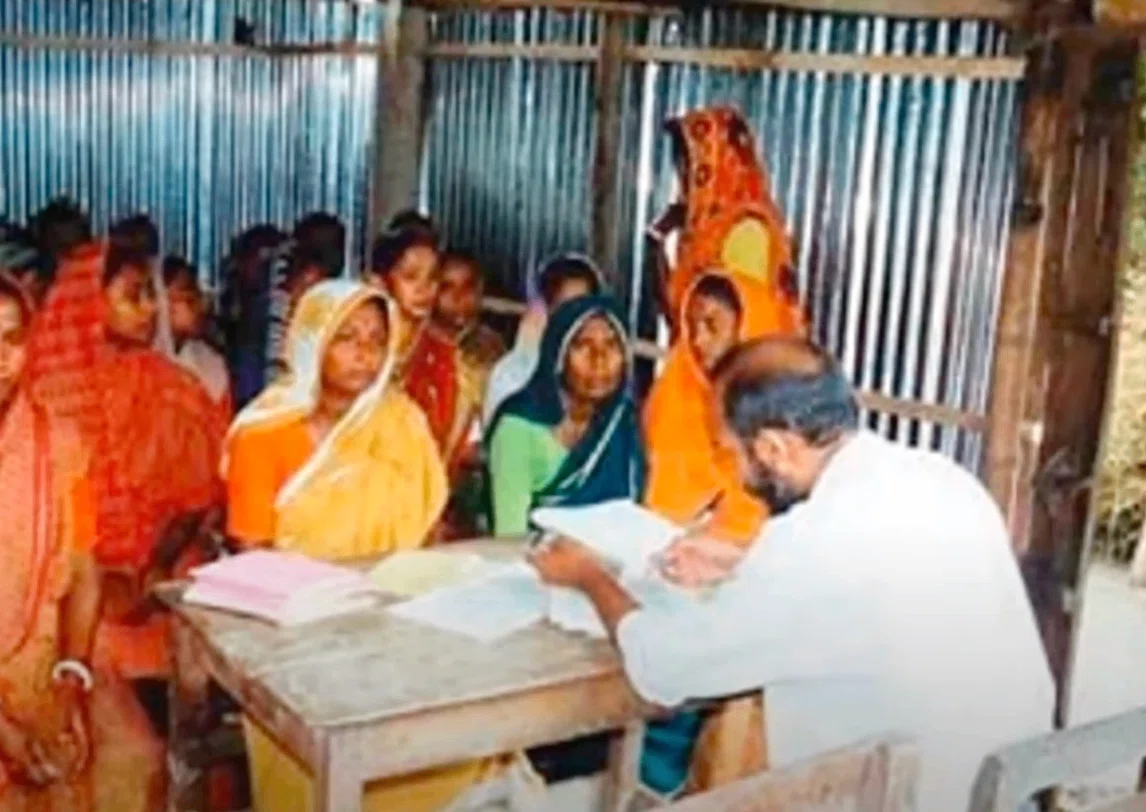
I realized that by applying business schemes, we can create a significant impact on solving social issues. This was about 26 years ago, but it remains a powerful formative experience etched in my memory.
Having seen the potential of finance, I decided to become a CPA. After three attempts, I finally passed the exam. Upon graduating from university, I joined PwC, where I worked in auditing and corporate restructuring.
From Corporate Restructuring to Social Innovation
As a CPA at PwC, I felt a growing disconnect. While our restructuring projects were "successful" on paper, they often resulted in mass layoffs. I found it hard to celebrate success when it came at such a human cost.
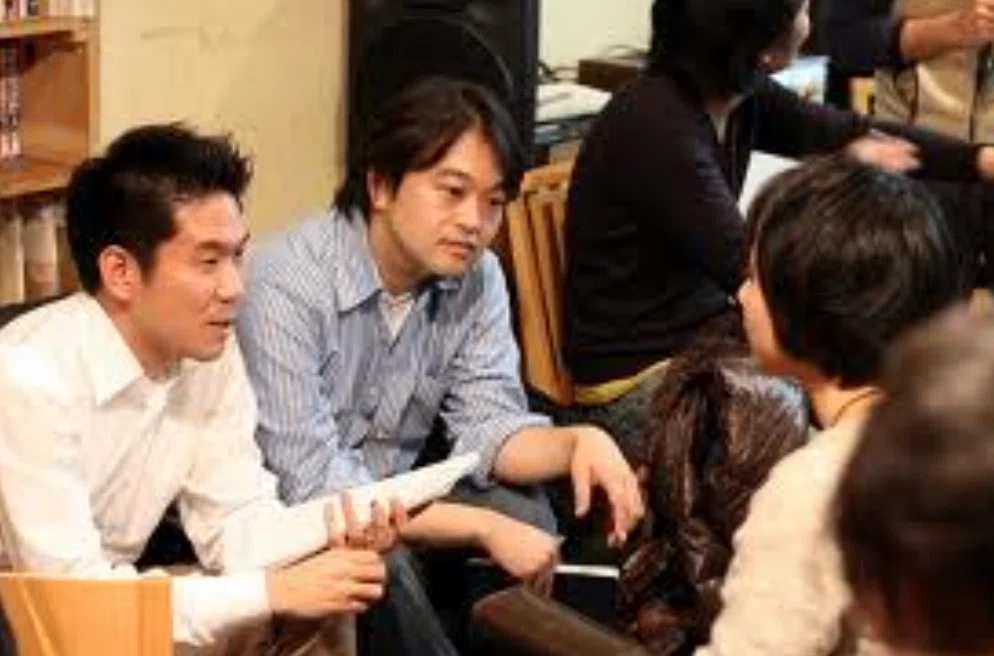
I kept thinking back to my time in Bangladesh while I was working day and night at PwC. I started to ask myself, “Why did I even become a CPA in the first place?”
Around that time, I met social entrepreneurs who were dedicated to solving social issues as a profession. Their drive and commitment deeply inspired me. The very next day, I signed up as a pro bono worker for an NPO.
A year later, in my early 30s, I finally took a leap of faith, leaving the corporate world behind to join the social sector full-time.
The Unexpected Succession
As a result, I took on two roles: Executive Director of Katariba, an educational NPO, and Representative Director of Social Venture Partners Tokyo (SVP Tokyo), an intermediary organization supporting social entrepreneurs.
Shortly after, the Great East Japan Earthquake struck in 2011. I had the invaluable experience of supporting Katariba from Tokyo as the organization established a base in the Tohoku region to provide educational relief and support to affected youth.
I thought I would work in this sector for the rest of my career. However, in 2018 at age 39, my life took an unexpected turn when my father passed away suddenly.
I knew nothing about the construction industry or the company my father had built, and I had no intention of taking it over. The funeral was so overwhelming that I barely had time to grieve. When I was asked to become the president just before rushing back to Tokyo, I initially refused.
But then I thought: I had dedicated my career to making the world a better place—how could I do nothing when the people my father treated like family were in trouble? It didn't sit right with me.
Around that time, I saw the person who had supported my father for years as his right-hand in the back office crying in front of me. There wasn't a complex reason, but my heart was moved. I decided to take on the role, thinking, 'This must be fate.'"
Adjusting to the local construction industry was a massive culture shock for me. But as I gained a deeper understanding of the industry, I realized that the ability to build and renovate physical structures is a powerful skill—one that could be applied to solve one of Japan’s hidden crises.
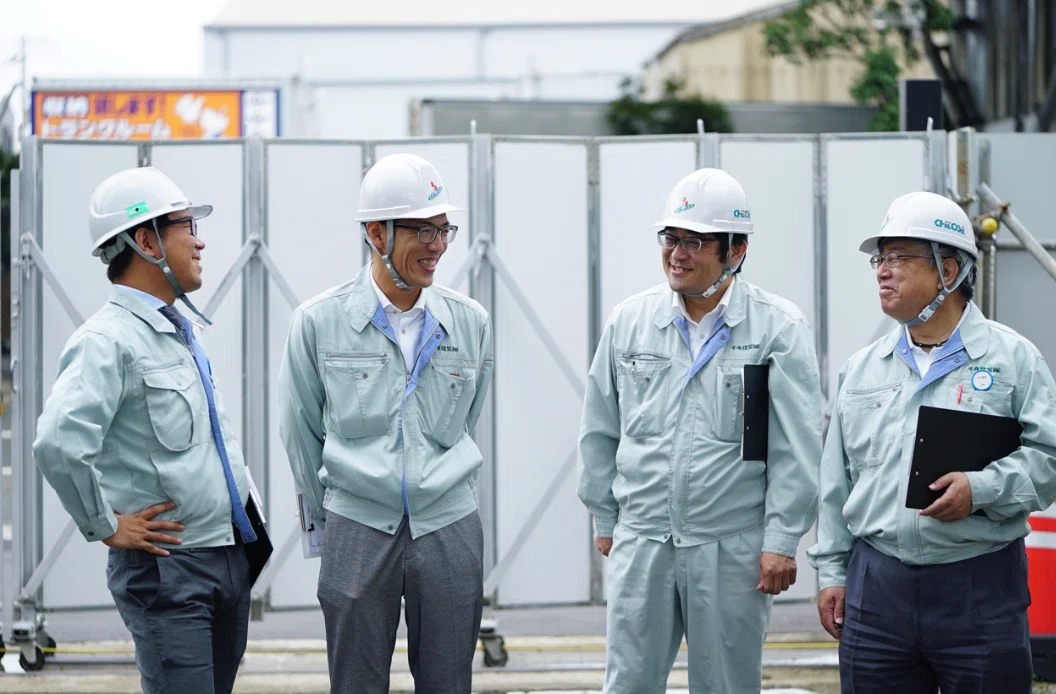
After two years of grinding it out and finding my footing as CEO of a local construction company, the COVID-19 pandemic hit.
LivEQuality: Tackling Housing Insecurity
As the pandemic unfolded, I learned how the crisis disproportionately affected vulnerable families, especially single mothers. Many fleeing domestic violence find themselves unable to rent an apartment because they lack a fixed address or a guarantor. Without a home, they cannot access government support, creating a "negative spiral" of poverty.
Even before the pandemic, child poverty rates in Japan were already alarmingly high. With the onset of COVID-19, the situation grew even more dire.

I decided to combine my experience in finance and business, NPO management and construction industry to create LivEQuality. The name represents the intersection of Live, Quality, and Equality.
Our model is a hybrid approach involving three entities:
1. Chitose Construction: Uses its technical expertise to renovate safe, high-quality housing.
2. LivEQuality Ooya san (For profit company): Provides these homes to single mothers at affordable rates.
3. LivEQuality HUB (Certified NPO): Provides community support and daily assistance to help residents rebuild their lives.
Today, it is not just the government but also for-profit corporations that are solving many social issues. However, there are areas where both sectors have failed, and supporting single mothers is one of those challenging areas.
On one hand, the government struggles to provide support because these mothers lack a fixed address. On the other hand, for-profit companies find it difficult to rent homes to those without stable income or a guarantor. Caught in between, these families fall into a downward spiral of poverty that prevents them from rebuilding their lives.
It is precisely in these areas that I believe a "hybrid support scheme"—one that combines the best of both business and social impact—is most effective.
A New Frontier for Affordable Housing in Japan
Recently, we raised 320 million yen through impact investing to expand our affordable housing stock. This is a significant step toward proving that social issues can be addressed through sustainable financial models.
This financing through Impact Bonds is more than just a capital raise for a single company. I believe it represents a significant step toward popularizing "Affordable Housing through Impact Investing" in Japan.
If this model scales, we will be able to provide safe, secure housing and meaningful connections to even more mothers and children who have lost their homes. It is this conviction that drives me to take on this challenge.
Shared Long-Term Vision: Local Family Business and Social Impact
In my younger years, I never imagined that I would one day lead a local construction company. Yet, that very experience has become my foundation—empowering me to launch social businesses and NPOs that tackle real-world issues.
Through this journey, I have come to a realization.
I believe that family businesses, with their long-term time horizons, are naturally compatible with social businesses that strive to solve issues that cannot be addressed by the market economy alone.
I never imagined I would be a construction CEO. But today, I see that the tools to build a better society were right there in my father’s company all along. We are just getting started.
Translated by Kei Eriksen, Global Partnership Manager at LivEQuality
> For inquiries regarding global partnerships or our affordable housing model, please feel free to reach out.

©︎ LivEQuality 2025